I probably could have titled this post: What I’ve learned since my husband became one of those bird watching guys.
Hummingbirds were always one of my favorite little signs that spring has arrived in Arkansas. But since my husband became obsessed with birds we now have hummingbird feeders at our house.
I tease him about it, but I have to admit that I also love watching them zip back and forth.
Here’s what I’ve picked up from him about the hummingbirds in Arkansas, including when they arrive, when they leave, and how to keep your feeders safe for them.
What Kind of Hummingbirds Are in Arkansas?
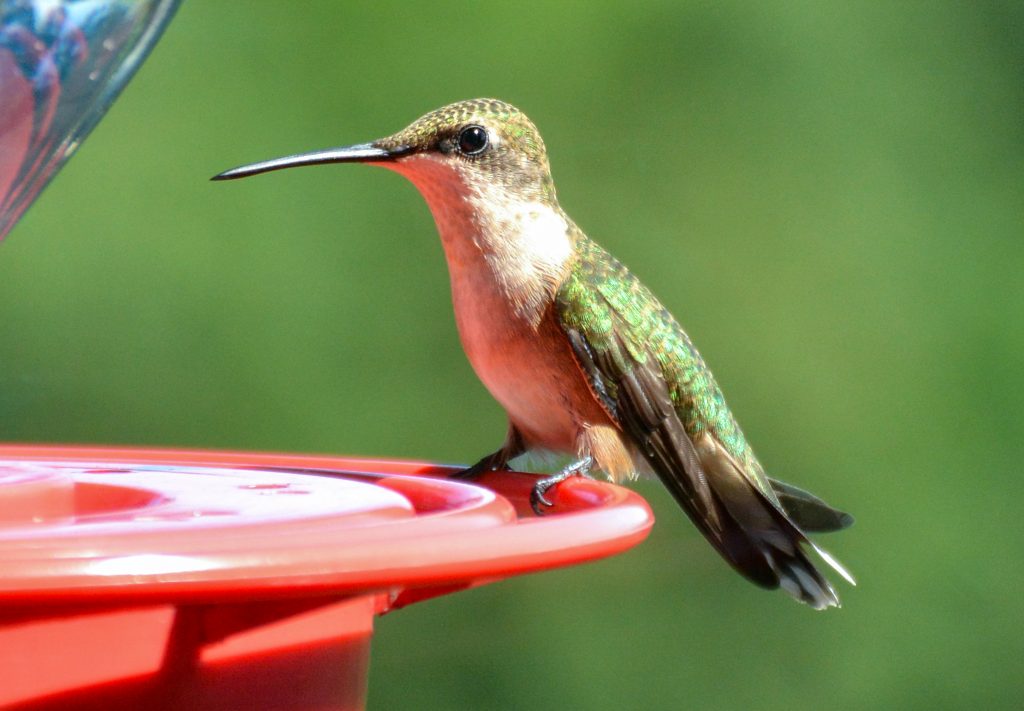
The one you’re going to see in Arkansas, almost without exception, is the Ruby-throated Hummingbird.
The males have the bright red throat that gives the bird its name. Females and young hummingbirds do not.
Other hummingbird species occasionally wander into Arkansas, but Ruby-throated Hummingbirds are the ones most of us will see around our yards and feeders.
When Do Hummingbirds Arrive in Arkansas?
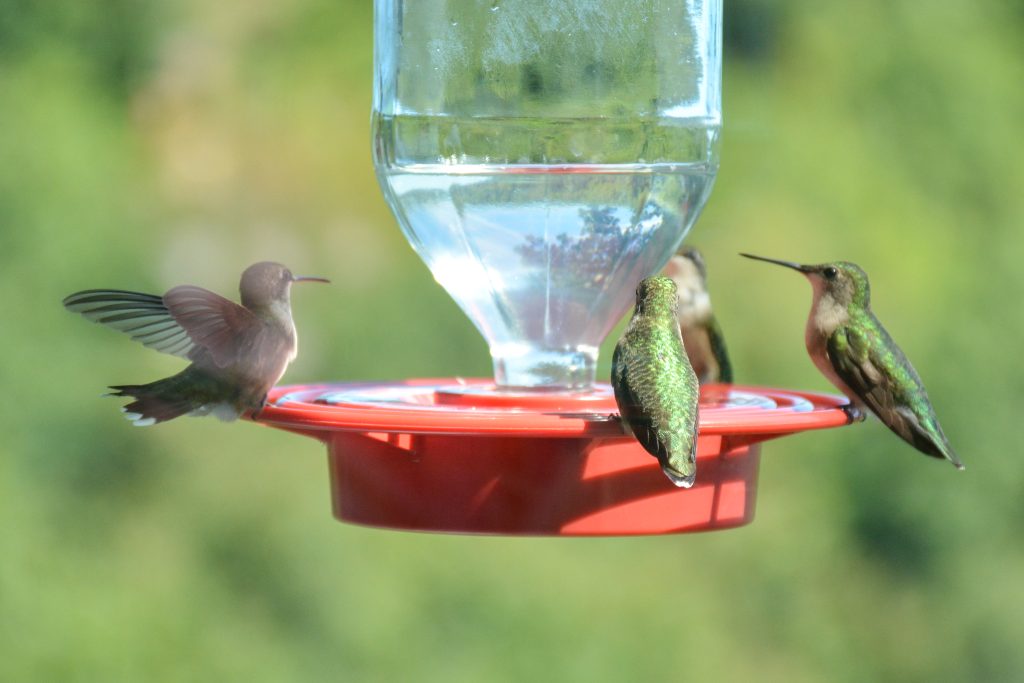
Ruby-throated Hummingbirds begin returning to Arkansas in the spring. The photos in this post were taken in the spring. This is when I tend to see the most hummingbirds.
They can start to appear as early as mid-March, with migration continuing through April. Some are only passing through Arkansas on their way farther north, while others will spend the spring and summer in our state.
My husband’s advice – and apparently the Arkansas Extension agrees with him – is to get your feeders out earlier than feels necessary.
Don’t wait for mid-April. The early arrivals and the ones just passing through both need somewhere to refuel in those days before many of the flowers are blooming.
How Long Do Hummingbirds Stay in Arkansas?
By late spring and summer, the birds won’t be totally relying on your backyard feeder.
They’ll also be working the flowers for nectar and eating tiny insects for protein. If you want to make your yard more appealing to them, try growing some nectar-rich plants like cardinal flower, butterfly weed, and butterfly bush.
I love to have a butterfly bush in my yard, but be aware that it isn’t native to Arkansas and is invasive in some parts of the country.
When Do Hummingbirds Leave Arkansas?
I was surprised to learn how early the hummingbirds begin heading south for the winter. Some start leaving in late July although the real wave comes in September and most Ruby-throated Hummingbirds are gone by mid-October.
They head to their wintering areas in Mexico and Central America. What’s crazy to me is that although some of the birds travel south around the coast, sticking close to land, others fly straight across the Gulf of Mexico.
That’s a nonstop journey of 500 miles! It’s hard for me to imagine those tiny birds making that journey. But apparently they do.
September can be an especially fun month to watch your feeders because the hummingbirds you’re seeing may not be the same ones that spent the summer in your yard. Birds from farther north are also moving through Arkansas and stopping to refuel.
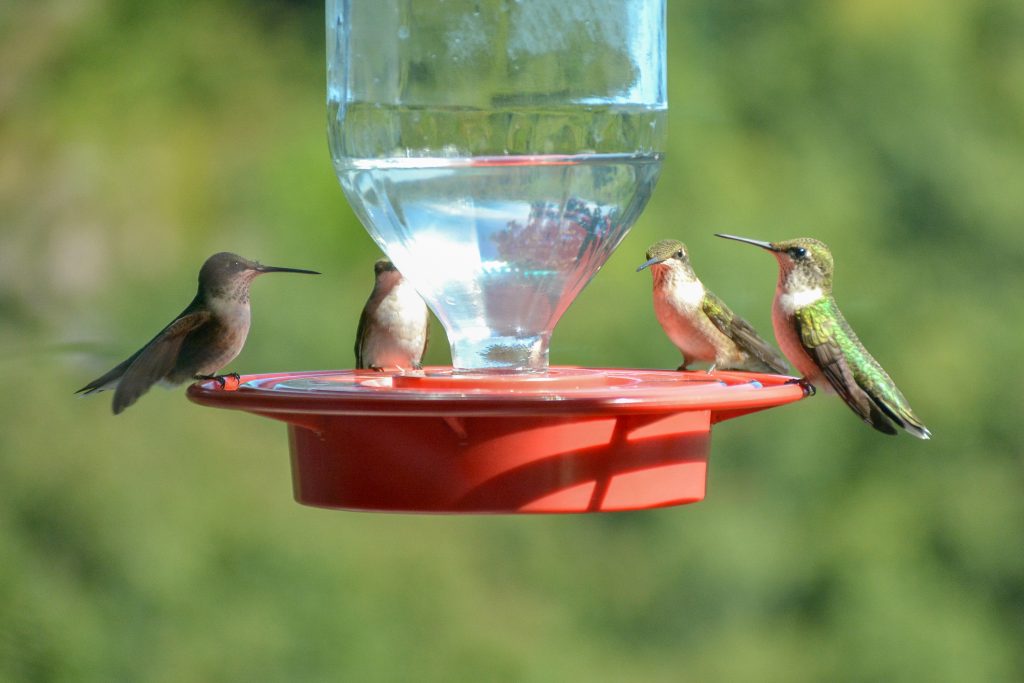
When Should You Take Down Hummingbird Feeders in Arkansas?
One thing that’s important to know is that you should not be in a rush to take the feeders down.
You may have heard the myth that if you keep feeding the birds that they won’t migrate. I had. But it’s not true.
Migration runs on instinct and the changing season. If anything, a late-season feeder just gives them more fuel for their long trip. You should actually keep the feeders up until you are no longer seeing hummingbirds. The timing will vary from year to year.
How to Make Hummingbird Nectar
Hummingbird food is very simple to make. You just mix 1 part plain white sugar to 4 parts water. That’s it.
And you don’t want to use red food coloring. Most hummingbird feeders have bright colors, particularly red, that will attract the birds.
The thing that actually matters most is keeping the nectar clean. Sugar water spoils quickly, especially in an Arkansas summer. The Arkansas Extension recommends changing it every 3–5 days normally and every 1–2 days when temperatures are above ninety degrees.
And, I mean, when aren’t the temperatures above ninety degrees in the summer in Arkansas?
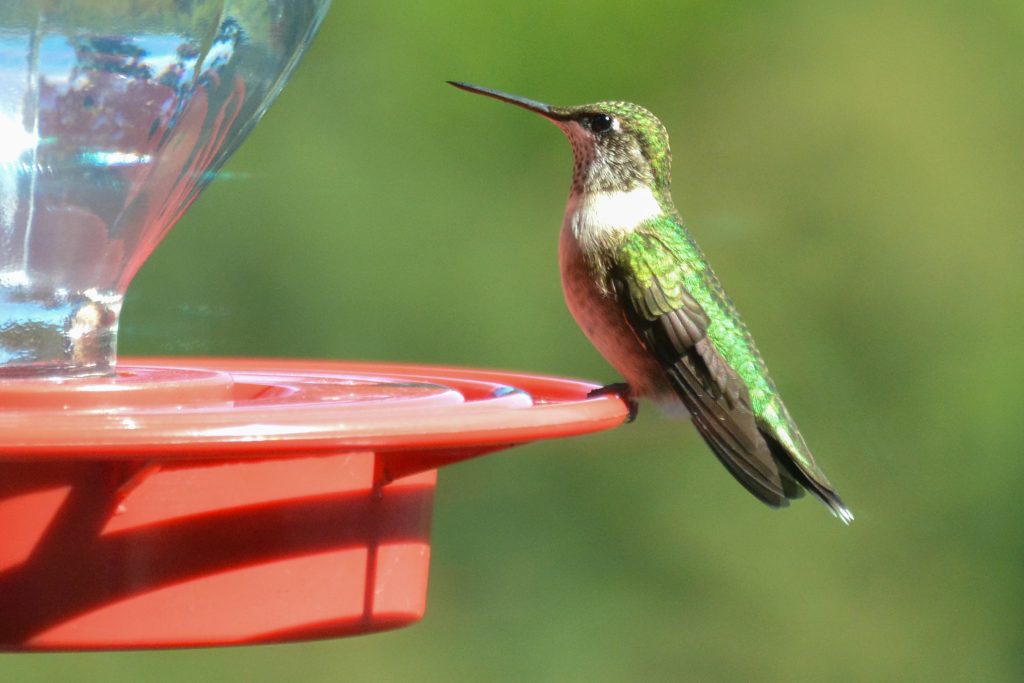
Where to See Hummingbirds in Arkansas
You don’t have to go anywhere special to see hummingbirds in Arkansas. A backyard with the right feeders and flowers will do it.
But there is one spot I love: Artist Point, up in the Boston Mountains near Mountainburg. All of these photos were taken at Artist Point.
Artist Point in the Boston Mountains
It’s an old roadside stop with a great view of the mountains.
But the real show begins during hummingbird season. Feeders line the deck, and I’ve stood there watching dozens of hummingbirds at one time.
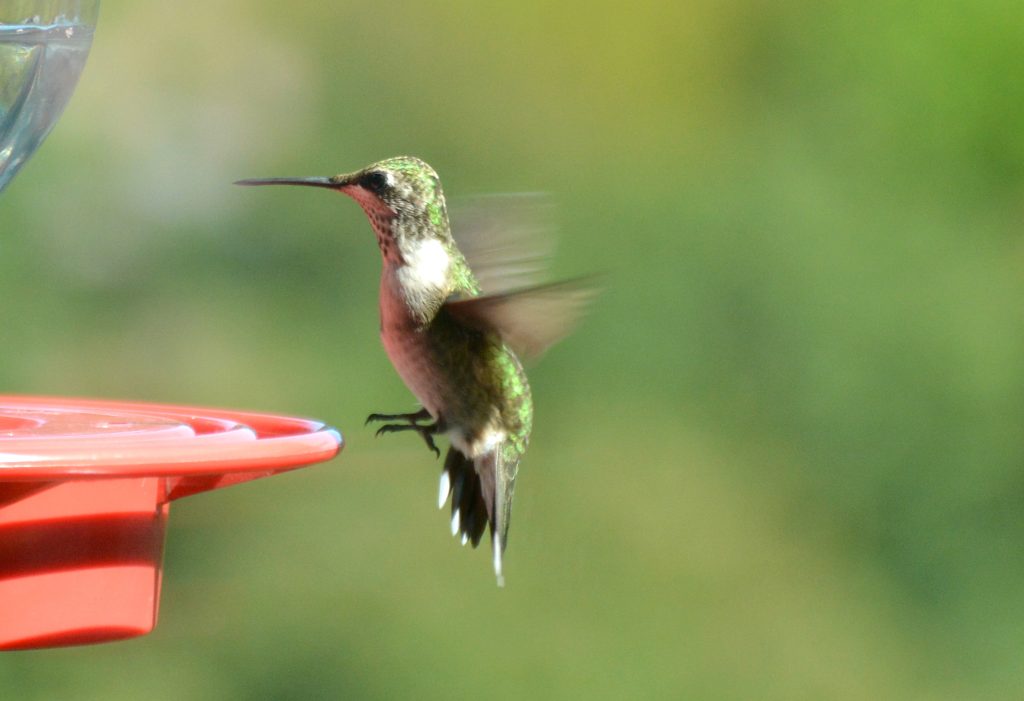
They seemed to be everywhere, darting around, fighting with one another – they are feisty little things – racing around with the sun shining on their iridescent green feathers, then stopping for a minute to dip their long bills into the feeders, and then on to the next spot, wings all in a blur.
It’s really something to see and Artist Point is one of those wonderfully quirky Arkansas places that you could easily drive past without realizing what’s there.
If you’re traveling through the Boston Mountains, especially when the hummingbirds are active, it’s definitely worth a stop.
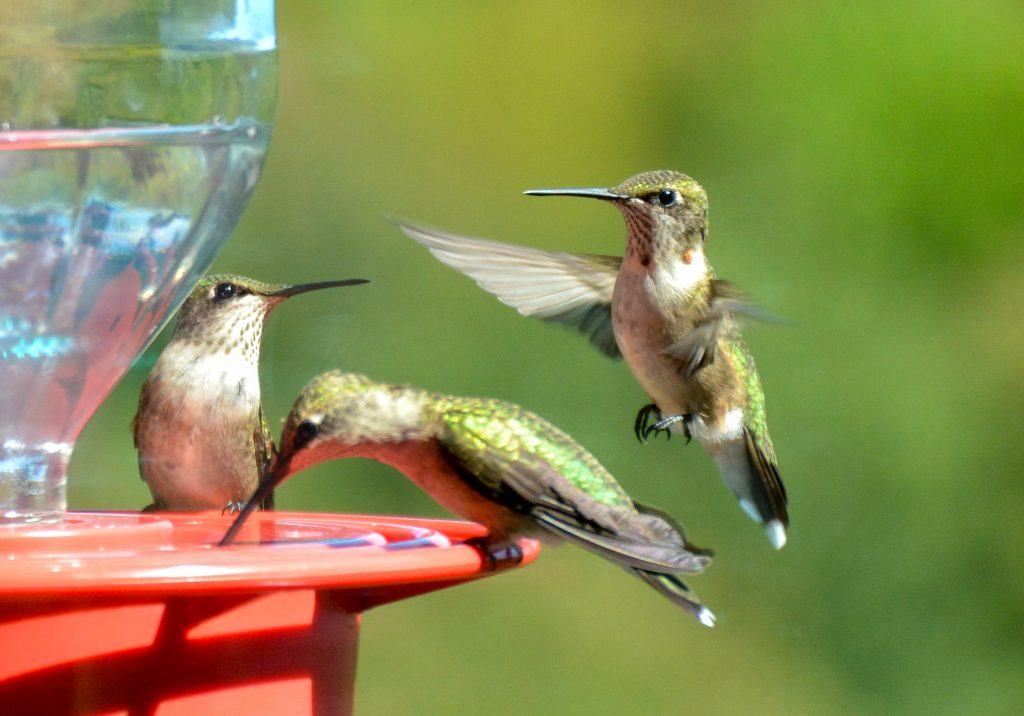
Enjoying Hummingbird Season in Arkansas
You really don’t have to become a serious bird watcher to enjoy hummingbirds.
Put a feeder out in early spring. Keep it clean and filled through the summer. Leave it up through fall migration as long as hummingbirds are still visiting.
And then be prepared for the possibility that someone in your household will suddenly start monitoring the feeders and giving you regular bird updates.
Apparently, that’s how becoming a bird-guy starts.